

Understanding when to fold in poker is one of the most valuable skills any player can develop, regardless of experience level. Folding at the right moment helps preserve your bankroll and prevents costly mistakes against stronger hands. In this guide, Game Bài explains how to recognize the best situations to fold and improve your long-term poker results.
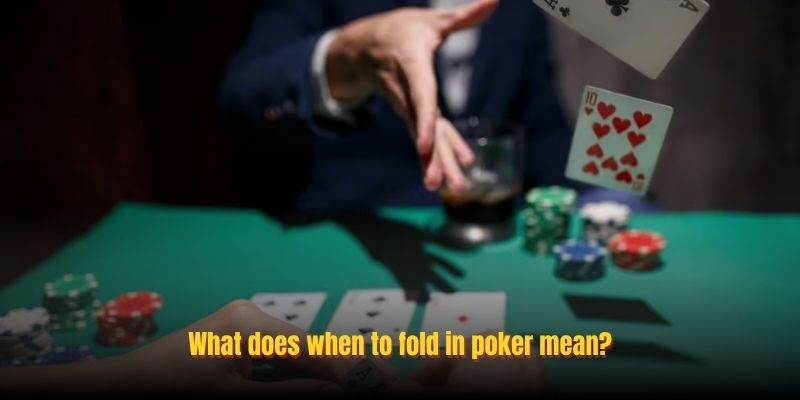
What does when to fold in poker mean?
Understanding when to fold in poker is one of the most important fundamentals for both beginners and experienced players. Instead of chasing weak hands, making the right fold at the right time helps preserve your bankroll and creates better opportunities in future rounds. Game Bài introduces the key concepts below to help you recognize the situations where folding is the smartest decision.
Fold when your starting hand is too weak
Not every hand is worth playing, especially before the flop.
- Fold low-value starting hands that have little chance of improving against stronger opponents.
- Avoid playing disconnected or unpaired cards unless the table situation clearly favors aggressive play.
- Save your chips for stronger hands with higher winning potential.
Fold when your opponent shows significant strength
Strong betting patterns often indicate that your opponent has a better hand.
- Pay attention to large raises and consistent aggression throughout the hand.
- Consider your opponent’s playing style before deciding whether to continue.
- Avoid calling simply because you have already invested chips in the pot.
What does when to fold in poker mean?
Understand the value of folding in long-term strategy
Many new players believe folding is a sign of weakness, but experienced poker players know the opposite is true. Learning when to fold in poker allows you to minimize unnecessary losses and focus your bankroll on situations with a higher probability of success. Consistent and disciplined folding is one of the foundations of profitable poker over the long run.
Evaluate the pot odds before making a decision
Comparing the potential reward with the cost of calling helps you make more rational decisions.
- Calculate whether the possible payout justifies the amount you need to invest.
- Fold if your drawing odds are lower than the price you must pay.
- Avoid relying solely on luck when mathematical probabilities are against you.
Control your emotions at the poker table
Emotional decisions often lead to unnecessary losses during a poker session.
- Accept that folding is sometimes the most profitable decision available.
- Never chase losses by continuing with weak hands out of frustration.
- Review each hand objectively to improve your understanding of when to fold in poker in future games.
Why knowing when to fold in poker is important
Making the correct folding decision is just as valuable as knowing when to bet or raise during a poker game. By understanding when to fold in poker, players can reduce unnecessary risks, protect their bankroll, and improve their overall decision-making at the table. The following table highlights the key reasons why this skill is essential, while Xóc đĩa online encourages players to develop disciplined habits for long-term success.
| Reason | Benefit |
| Preserve your bankroll | Folding weak hands prevents unnecessary chip losses and allows you to stay competitive throughout longer poker sessions. |
| Avoid costly mistakes | Letting go of marginal hands reduces the chance of making expensive calls against stronger opponents. |
| Improve decision-making | A disciplined folding strategy helps players focus on profitable situations instead of relying on luck alone. |
| Control emotions | Knowing when to fold in poker minimizes tilt and prevents impulsive decisions after losing a hand. |
| Strengthen long-term profitability | Consistently folding in unfavorable situations increases your chances of achieving better results over time. |
| Gain a strategic advantage | Patient players often create more opportunities to capitalize on premium hands and favorable table dynamics. |
| Build confidence at the table | Making logical folding decisions develops discipline, experience, and a more balanced poker strategy for future games. |

Why knowing when to fold in poker is important
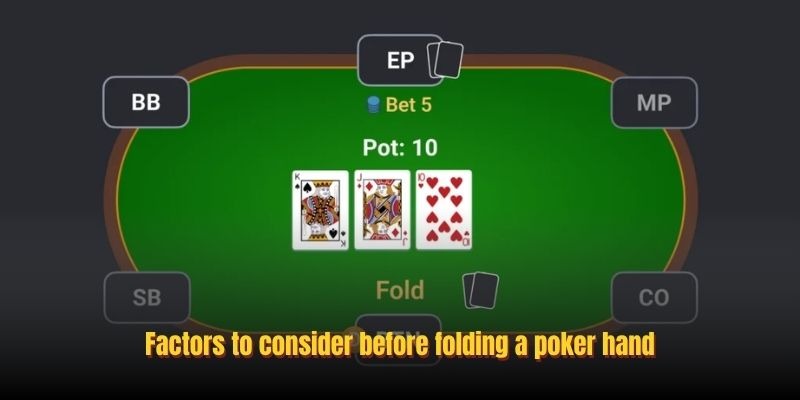
Factors to consider before folding a poker hand
Making the right fold requires more than simply looking at your cards, as every decision should be based on the overall situation at the table. Understanding when to fold in poker becomes much easier when you evaluate several important factors, and Game Bài recommends considering the following points before giving up on any hand.
Evaluate the strength of your hand
Your own cards should always be the first factor in any folding decision.
- Compare your current hand with the possible hands your opponents may hold.
- Consider whether your hand still has realistic chances of improving on later streets.
- Avoid overvaluing weak pairs or marginal drawing hands.
Observe your opponent’s betting behavior
Betting patterns often provide valuable clues about the strength of an opponent’s hand.
- Watch for large raises, repeated aggression, or unexpected all-in moves.
- Identify whether your opponent is playing tightly or bluffing frequently.
- Adjust your decision based on the information revealed during the hand.
Understand your table position
Position has a significant influence on poker strategy and can affect whether folding is the best option. Players acting later receive more information from opponents before making a decision, while early-position players usually face greater uncertainty. Recognizing the relationship between position and when to fold in poker helps improve consistency over the long term.
Compare pot odds with drawing odds
Mathematical analysis is an important part of making profitable folding decisions.
- Calculate whether the potential reward justifies calling the current bet.
- Fold when the cost of continuing outweighs your chances of completing a winning hand.
- Base your decision on probability rather than emotion.
Consider your bankroll and tournament stage
Every poker decision should reflect your overall strategy instead of focusing on a single hand.
- Protect your bankroll by avoiding unnecessary risks with weak holdings.
- Play more cautiously during important tournament stages when survival matters.
- Adjust your level of aggression according to stack size and table dynamics instead of reacting impulsively.
Factors to consider before folding a poker hand
Conclusion
Success in poker is not determined by how many hands you play, but by choosing the right moments to continue or walk away. Understanding when to fold in poker allows you to protect your bankroll, capitalize on better opportunities, and become a more strategic player over time. Stay connected with Game Bài for the latest poker insights, comprehensive tutorials, and effective strategies to elevate your game.
